5 Things You Shouldn’t Do When Driving in the Rain

Driving in the rain can be a daunting experience, even for seasoned drivers. Wet weather conditions introduce several challenges on the road, from severely reduced visibility to increased stopping distances. As a driver, knowing how to maintain safety in the rain and when to safely pause your journey is essential.
If you decide you need to stop and wait for the rain to subside, remember to find a safe, designated rest area to take a break and recharge. This not only allows you to refresh but also gives the heavy rain time to pass before you continue your journey.
In this guide, we’ll highlight five critical errors to avoid when driving in the rain to help you stay safe and focused on the road. Let’s dive in!
1) Don’t Use Your High-Beam Lights
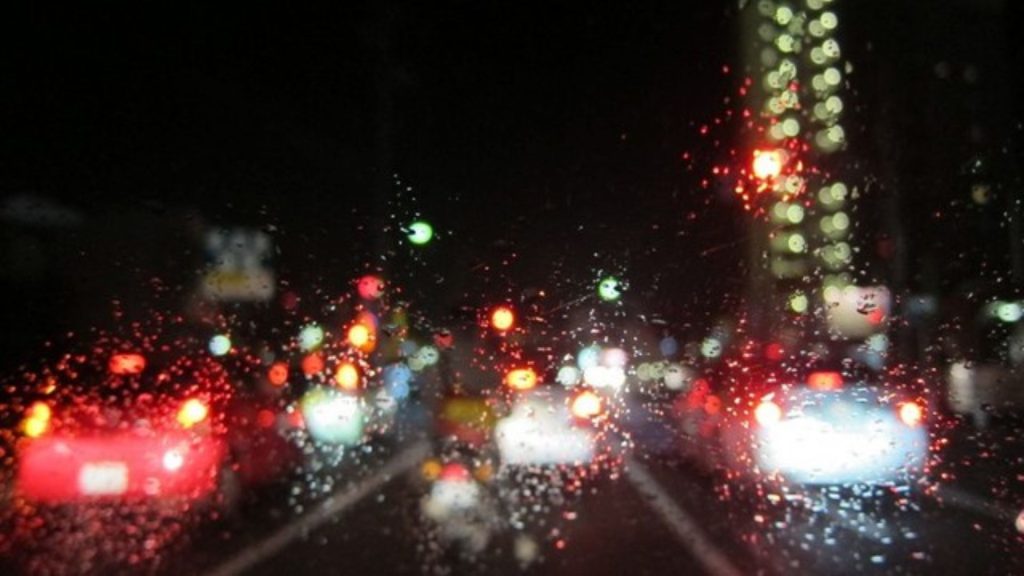
DON’T
Using your high-beam headlights in the rain can be hazardous. While high beams are designed for maximum visibility in pitch-black conditions, during heavy rain, the light reflects off the water droplets, creating a blinding glare that significantly reduces your visibility and temporarily affects the sight of oncoming drivers. This reflected light also makes it much harder to distinguish between water on the road and dry surfaces.
DO
Instead of high beams, it is strongly recommended to use dipped-beam headlights (low beams) or dedicated fog lights. Dipped beams provide adequate illumination without causing reflection or glare, while fog lights are specifically engineered to penetrate inclement weather conditions near the road surface.
2) Don’t Brake Suddenly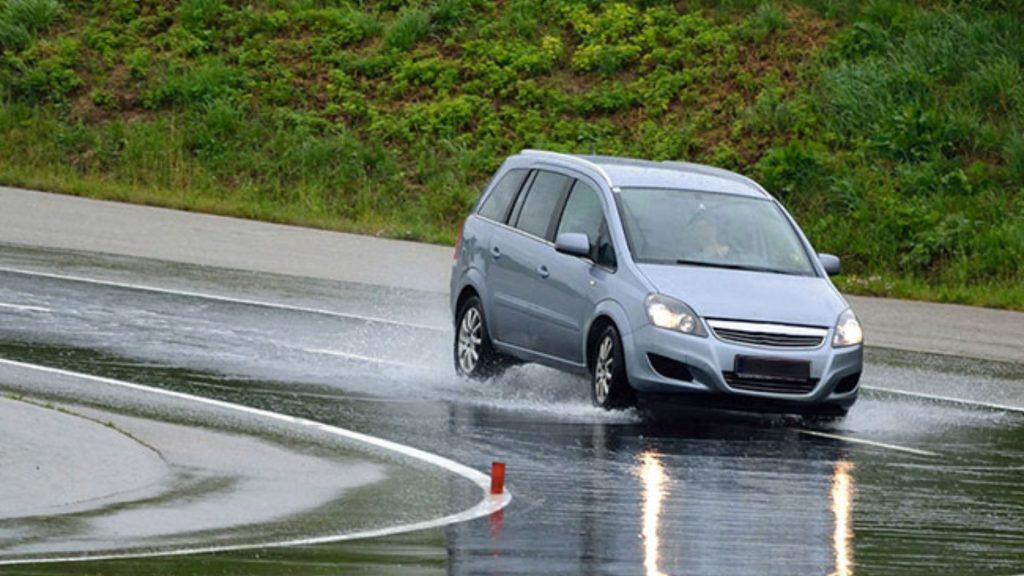
DON’T
Wet roads have significantly reduced friction. When you suddenly stomp on the brakes, your tires may instantly lose traction, causing the vehicle to skid or hydroplane, leading to a complete loss of control. Emergency braking in these conditions can also severely stress the car’s braking system.
DO
Prioritize safety by applying the brakes gradually and steadily whenever you need to slow down or stop. Maintain a moderate, predictable speed, and avoid sudden steering or acceleration inputs. Smooth, measured control is key to decreasing the chances of skidding and improving overall vehicle stability.
3) Don’t Drive at Excessive Speed
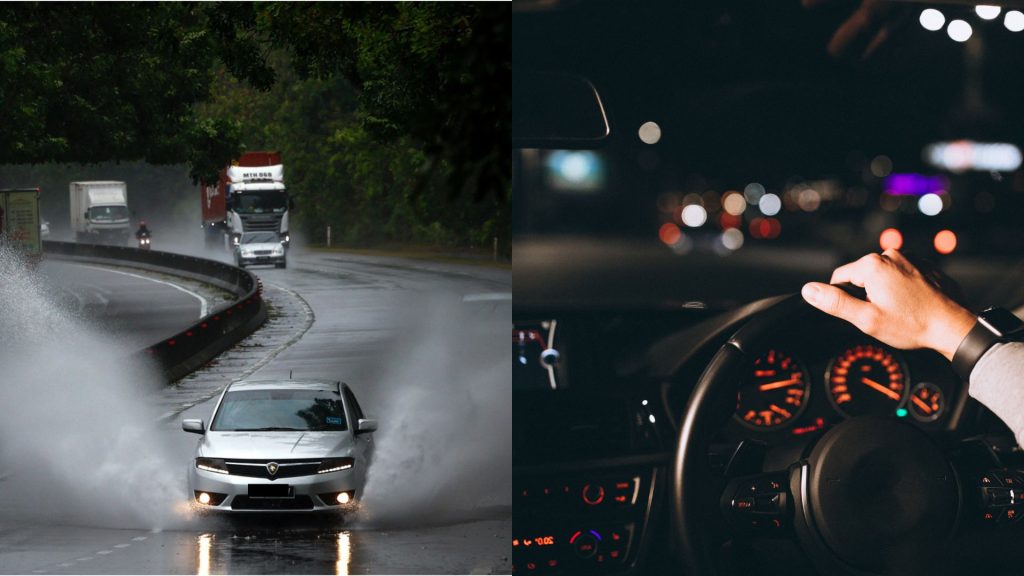
DON’T
Driving too fast in the rain increases danger because wet roads are slicker, and your tires’ tread cannot effectively displace the water. High speed, even over a small amount of standing water, dramatically increases the risk of hydroplaning (when the tire loses contact with the road surface). This is one of the leading causes of rain-related accidents.
DO
It is crucial to slow down significantly—well below the posted speed limit—and allow yourself ample room and time to brake. If you find yourself uncomfortable or if visibility drops sharply due to the rain intensity, safely pull over and wait for the weather to improve.
4) Don’t Tailgate Other Vehicles
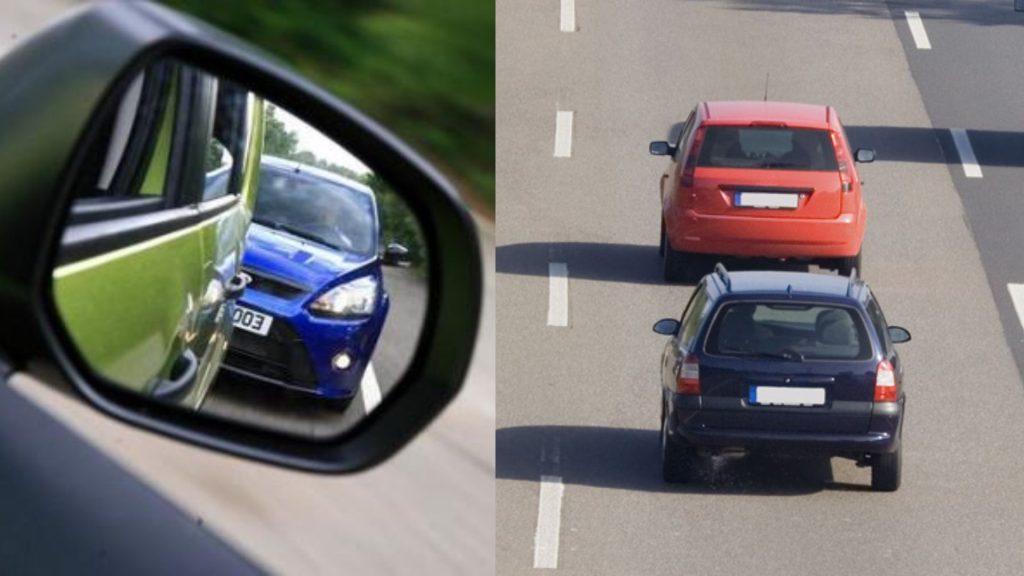
DON’T
When driving too closely behind another vehicle in the rain, you risk having insufficient time to react and brake in an emergency, especially since wet-road stopping distances are much longer. This dangerous practice frequently leads to rear-end collisions.
DO
To mitigate these risks, significantly increase your following distance. A good rule of thumb in wet conditions is to leave a space of at least three to four seconds between your vehicle and the one directly in front of you. This extra distance provides the necessary buffer time to react to the car ahead slowing or encountering an obstacle.
5) Don’t Engage in Distractions

DON’T
Driving in the rain demands maximum focus and attention. Common distractions like interacting with mobile devices (texting or scrolling), eating/drinking, or having engaging conversations with passengers drastically reduce your reaction time. When road conditions are poor, even a moment of distraction can be catastrophic.
DO
Always stay mentally focused forward and pay attention to traffic signals and the movement of other vehicles. If you feel mentally fatigued or distracted, pull over immediately at a safe location to rest and re-focus. Utilize voice commands or built-in vehicle systems for essential functions, ensuring your hands stay on the wheel and your eyes on the road.
Frequently Asked Questions (FAQ)
What is hydroplaning and how can I avoid it?
Hydroplaning occurs when your tires ride on a layer of water instead of the road surface, causing a loss of traction and control. To avoid it, **reduce your speed significantly**, ensure your tires have good tread depth, and **avoid sudden steering movements**.
Should I use my hazard lights while driving in heavy rain?
While this practice is common in some regions, it is generally **discouraged**. Hazard lights can confuse other drivers about your intentions (are you stopped or moving?). It is better to use your **low-beam headlights and fog lights** to increase visibility.
How much should I increase my following distance in the rain?
Under normal, dry conditions, a two-second rule is standard. In the rain, you should increase this to a minimum of **three to four seconds** to account for reduced friction and longer stopping distances.