
Roundabouts. For many new drivers, they seem like some kind of elaborate traffic maze designed to induce panic. But trust me, they’re not! Once you understand the basic principles, you’ll find they’re actually a safer and more efficient way to navigate intersections than traditional stoplights.
Learning how to confidently handle roundabouts will make you a more adaptable and observant driver. You'll develop better scanning habits and learn to yield appropriately, skills that are valuable in any driving situation. Plus, conquering a roundabout is a great confidence booster!
Here's a quick tip: think of roundabouts like merging onto a highway. You need to assess the flow of traffic, find a safe gap, and smoothly integrate yourself into the existing stream.
Understanding the Basics of Roundabouts
So, whatisa roundabout? It's essentially a circular intersection where traffic flows in one direction around a central island. Cars entering the roundabout yield to vehicles already circulating. This continuous flow reduces the need for stopping and starting, leading to fewer accidents and less congestion. Unlike a four-way stop, roundabouts don’t require everyone to come to a complete halt if there’s no other traffic present.
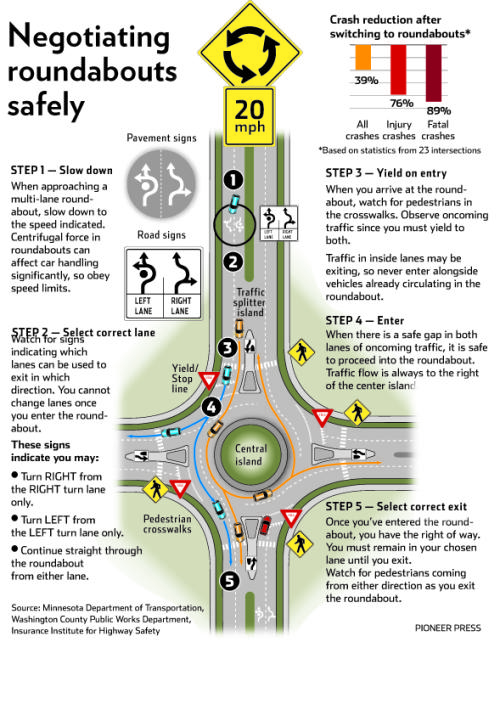
Before you even approach a roundabout, pay attention to the signage. There will usually be signs indicating that you're approaching a roundabout, as well as signs showing lane designations and potential exits. These signs are there to help you plan your route in advance. Proper planning is a fundamental safe habit behind the wheel.
As you approach, reduce your speed. This gives you more time to assess the traffic situation and react appropriately. Look to your left. This is where the circulating traffic will be coming from. Yield to any vehicles already in the roundabout. Don’t enter until there’s a safe gap.
Once you've found a suitable gap and entered the roundabout, maintain a steady speed and follow the flow of traffic. Signal your intention to exit. This lets other drivers know you're about to leave the roundabout and prevents confusion.
What happens if I miss my exit?
Don’t panic! Simply continue around the roundabout and take the exit on your next go-around. It’s much safer to circle again than to make a sudden, unsafe maneuver. Missing an exit happens to everyone, even experienced drivers! This is a perfect example of why it's important to stay calm and focused while driving, especially when you're feeling a bit of driving anxiety.
Navigating Multi-Lane Roundabouts
Single-lane roundabouts are fairly straightforward, but multi-lane roundabouts can feel a bit more complex. The key is to choose the correct lanebeforeyou enter the roundabout, based on your intended exit.
Again, pay close attention to the signage as you approach. The signs will typically indicate which lanes are for which exits. For example, the right lane might be for the first exit, the middle lane for the second exit, and the left lane for the third exit (but always confirm with the signage!).
If you need to change lanes within the roundabout, signal your intention and check your mirrors and blind spots. Make sure it's safe to change lanes before doing so. Remember, drivers already in a lane have the right-of-way.
Think of it like merging onto a highway – you need to check for traffic and merge smoothly. It’s all about being aware of your surroundings and communicating your intentions clearly. This proactive approach is part of mastering learner’s permit tips and building solid driving skills.
What if I'm not sure which lane to be in?
If you're unsure, it's generally safer to choose an outer lane. This gives you more options and allows you to exit without having to cross multiple lanes of traffic. Remember, it’s always better to err on the side of caution. If you end up in the wrong lane, don't try to make a last-second, risky maneuver. Just continue around and try again.
Essential Tips for Roundabout Safety
Here’s a quick checklist to keep in mind when approaching and navigating roundabouts: Slow Down: Reduce your speed as you approach. This gives you more time to react and make safe decisions. Yield to Traffic: Always yield to vehicles already in the roundabout. Pay Attention to Signage: Look for signs indicating lane designations and exits. Signal Your Intentions: Use your turn signals to indicate when you're entering, changing lanes, or exiting the roundabout. Maintain a Safe Following Distance: Leave enough space between your vehicle and the vehicle in front of you. Avoid Distractions: Stay focused on the road and avoid using your phone or engaging in other distracting activities. Be Predictable:Drive smoothly and predictably to avoid confusing other drivers.
Following these simple tips will help you navigate roundabouts safely and confidently. Parent-supervised driving practice in different traffic scenarios is also key to developing comfort and expertise.
How long does it take to get comfortable driving in roundabouts?
The time it takes to become comfortable with roundabouts varies from person to person. Some people pick it up quickly, while others need more practice. The key is to be patient with yourself and to practice regularly. Start with less busy roundabouts and gradually work your way up to more complex ones. Remember, everyone learns at their own pace. Don't get discouraged if you don't feel comfortable right away. With practice and patience, you'll get there.
Common Mistakes to Avoid in Roundabouts
Even experienced drivers sometimes make mistakes in roundabouts. Here are some common errors to watch out for: Failing to Yield: This is the most common mistake and can lead to accidents. Remember, always yield to traffic already in the roundabout. Entering Without a Safe Gap: Don't force your way into the roundabout. Wait for a safe gap in traffic before entering. Changing Lanes Without Signaling: Always signal your intentions before changing lanes within the roundabout. Stopping in the Roundabout: Unless absolutely necessary (e.g., to avoid a collision), avoid stopping in the roundabout. This can disrupt the flow of traffic and create a hazard. Driving Too Fast: Maintain a safe speed that allows you to react to changing traffic conditions. Getting Distracted: Pay attention to your surroundings and avoid distractions like cell phones. Hesitating:While yielding is important, avoid excessive hesitation. Once you have a safe gap, enter the roundabout smoothly.
Being aware of these common mistakes will help you avoid them and become a safer roundabout driver. It’s all part of building solid parallel parking basics and overall driving competence.
What’s the best way to learn parking?
Parking, especially parallel parking, often feels like a daunting task for new drivers. The best approach is to break it down into smaller, manageable steps. Start by practicing in an empty parking lot with cones or markers. Focus on mastering each step before moving on to the next. Visual aids and online tutorials can also be helpful. And remember, practice makes perfect! The more you practice, the more comfortable and confident you'll become.
The Benefits of Roundabouts
While they might seem intimidating at first, roundabouts offer several advantages over traditional intersections.
Increased Safety: Studies have shown that roundabouts reduce the number and severity of accidents. This is because they eliminate the need for left turns across oncoming traffic, which is a major cause of collisions. Reduced Congestion: Roundabouts can improve traffic flow by reducing the need for stopping and starting. This can lead to shorter travel times and less congestion. Improved Efficiency: Roundabouts are more efficient than traditional intersections because they allow traffic to flow continuously. Reduced Fuel Consumption: By reducing the need for stopping and starting, roundabouts can help save fuel. Environmental Benefits:Roundabouts can reduce emissions by improving traffic flow and reducing fuel consumption.
Once you get the hang of them, you'll appreciate the many benefits that roundabouts offer. They're a smart and effective way to manage traffic and make our roads safer.
Remember, learning to drive is a journey, and every skill you master, like navigating roundabouts, brings you closer to becoming a confident and responsible driver. Embrace the challenge, practice regularly, and don't be afraid to ask for help. You've got this!